
Smart Cross‑Selling: A Marketing‑Led Approach to Expanding Client Value
Most companies say they value customer feedback. Far fewer actually use it to shape their marketing, sharpen their message, or guide their business growth strategies. In a world where buyers have endless options and shrinking patience, the organizations that win are the ones that listen (really listen) and turn those insights into action.
Customer feedback isn’t just a report. It’s a roadmap. And when you treat it like fuel, it can transform your entire marketing engine.
The Hidden Power Inside Every Customer Feedback Survey
A customer feedback survey is more than a scorecard. It’s a direct line into the mind of your buyer - what they love, what frustrates them, what almost stopped them from choosing you, and what would make them stay longer.
Some companies collect feedback, and unfortunately, some don't. Sure, it can be uncomfortable to hear about your company's flaws, but how do you know what to fix if you don't know what's broken? Sticking your head in the sand isn't going to bring you more customers; it's going to help you lose them.
Even when companies collect feedback, they often do it to check a box and don’t utilize it to spark real change in strategy. They file it away, skim the highlights, or only react when something goes wrong. But the real opportunity lies in using feedback proactively to:
-
Clarify your value proposition - What sets you apart from similar companies?
-
Strengthen your messaging - Are you connecting with your target audience?
-
Improve your website experience - Do visitors find what they need easily?
-
Build trust with social proof - Can your company be trusted?
-
Personalize your marketing - Does your target audience feel like you are speaking directly to them?
-
Reduce churn and increase lifetime value - What is losing you customers, and what is helping you keep customers?
When you treat feedback as strategic intelligence, not a formality, you unlock smarter, more effective B2B marketing strategies.
Modern Feedback: Signals Everywhere, Insights Nowhere
Today’s customers leave clues across dozens of touchpoints:
-
Product Reviews/Google Reviews
-
Support tickets
-
Sales calls
-
Social media comments
-
Chat transcripts
-
On‑site behavior
-
Google Search Trends
-
Industry forums
-
Competitor comparisons
The challenge isn’t a lack of data. It’s the lack of structure, ownership, and action.
Leaders often struggle to separate meaningful insights from noise. Teams collect data but don't know how to interpret it, use it, or share it. Marketing hears one thing, sales hears another, and leadership hears something else entirely.
The result: misalignment, wasted spend, and messaging that doesn’t match what customers actually care about.
Capturing Insights That Actually Matter
Identify the Right Sources
Not all feedback is created equal. The most valuable insights often come from:
-
High‑intent buyers
-
Lost deals
-
Repeat Customers
-
Support interactions
-
Behavioral patterns (what customers do, not just what they say)
These sources reveal motivations, objections, and friction points that directly impact revenue.
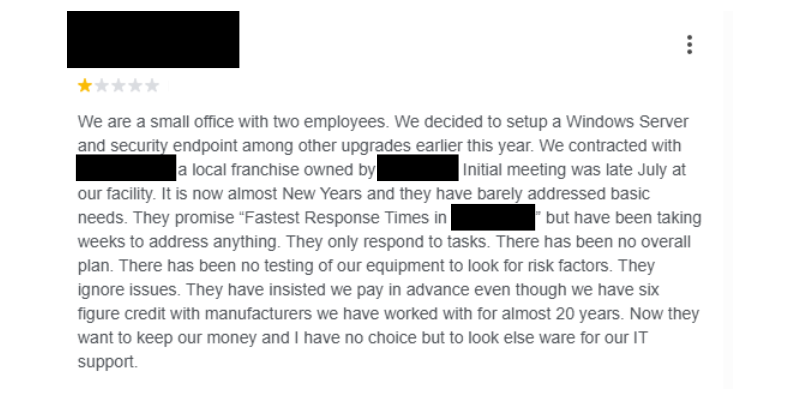
Take the following Google review, for example. From this and the company's response (not shown), we know the client didn't understand the package/service they were signing up for. They also didn't understand the actual response time they could expect with the specific service they purchased. Both issues can be addressed in marketing with clearer messaging, but they also need to be addressed during sales calls and client meetings.
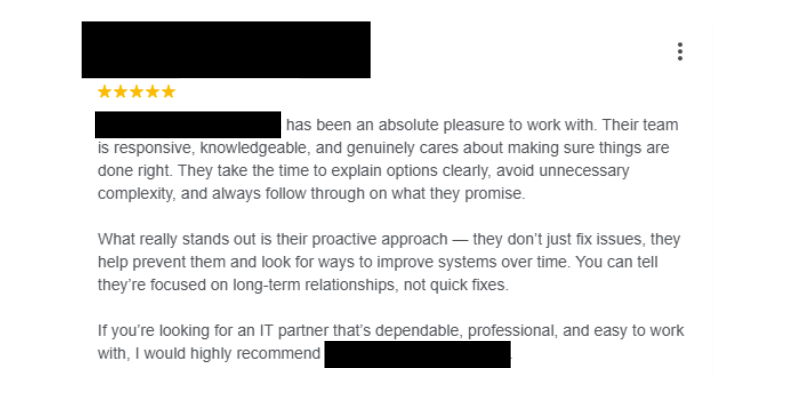
Now let's look at a 5-star review from a different company. This review provides some great details that can be emphasised in marketing - genuinely cares, proactive, focused on long-term relationships, dependable. These descriptions can be incorporated into your website, social media, and emails. But don't forget to share the actual review to enhance social proof! (Remember - people like hearing from other people!)
Ask Better Questions
Generic questions produce generic answers. Strategic questions uncover truth.
Instead of:
“How satisfied were you?”
Ask:
“What almost stopped you from choosing us?”
“What problem were you trying to solve when you found us?”
“What made you choose us over alternatives?”
These answers become marketing gold. When your marketing team understands your customers' objections, challenges, and needs, they can craft not only marketing content to address them but also rework the strategy to focus on them in the long term.
Turning Insights Into Action
Map Insights to the Buyer Journey
Every piece of feedback fits somewhere:
-
Awareness: What customers misunderstand about your category or solution
-
Consideration: What slows down evaluation
-
Decision: What risks or doubts block conversion
-
Loyalty: What drives repeat business or churn
When you map insights to stages, you can fix the right problems at the right time.
Prioritize by Business Impact
Not every insight deserves equal attention. Focus on:
-
Issues that cost the most revenue
-
Friction points that slow down buying
-
Opportunities that create fast wins
-
Patterns that appear across multiple channels
This keeps teams aligned and prevents “pet project” distractions.
Six Ways to Turn Customer Feedback Into Marketing Fuel
1. Sharpen Your Value Proposition
Your customers describe your value more clearly than you do. Use their language to refine your positioning and eliminate jargon. Learn more about writing a compelling unique value proposition
2. Strengthen Messaging Across Channels
If customers repeat the same phrases, objections, or benefits, those belong in your headlines, CTAs, and nurture sequences.
3. Improve Website Experience
Feedback often reveals friction points like confusing navigation, missing information, unclear pricing, or slow response times. Fixing these improves conversions instantly. Learn more about the science of website first impressions
4. Build Trust With Social Proof
Reviews, testimonials, and case studies are credibility accelerators. Mine them for:
-
Proof points
-
Before‑and‑after stories
-
Industry‑specific wins
-
Quotes that reinforce your value
5. Personalize Nurture and Follow‑Up
Use insights to segment by motivations, not demographics. AI marketing tools can help automate personalization at scale, ensuring every prospect receives messaging that feels relevant and human.
6. Strengthen Retention and Loyalty
Feedback reveals the moments where customers feel neglected. Use it to improve onboarding, support, and long‑term engagement.
Why Organizational Improvements Must Happen Alongside Marketing Improvements
Customer feedback doesn’t just reveal marketing problems. It exposes operational, cultural, and structural issues inside the business; the things marketing can’t fix alone.
And this is where many companies get it wrong.
They try to “market their way out” of problems that are actually rooted in service gaps, product limitations, slow response times, unclear processes, or inconsistent customer experiences. Marketing can amplify strengths, clarify value, and accelerate growth, but it cannot compensate for a broken customer journey.
When feedback highlights deeper issues, organizations must be willing to make internal improvements, such as:
-
Fixing recurring service or support bottlenecks - If customers consistently mention slow response times, unclear communication, or unresolved issues, no amount of messaging will rebuild trust until the operational process is repaired.
-
Improving product or service quality - Feedback often reveals missing features, confusing workflows, or reliability concerns. These require cross‑department collaboration, not just better copy.
-
Aligning sales, service, and marketing around the same truth - When teams operate in silos, customers feel it. Feedback helps unify teams around shared priorities and consistent messaging.
-
Clarifying internal processes that create customer friction - Billing confusion, onboarding delays, or inconsistent follow‑up are business problems — and they directly impact retention and reputation.
-
Training teams based on real customer expectations - Feedback often uncovers gaps in communication, empathy, or product knowledge. Internal training becomes a growth lever, not a cost.
Why These Changes Matter for Marketing Success
Marketing is only as strong as the experience it represents.
If the business doesn’t evolve based on customer insights, marketing ends up making promises the organization can’t keep. That disconnect erodes trust, increases churn, and weakens every campaign.
When operational improvements happen alongside marketing improvements, you create a powerful flywheel:
-
Marketing sets clear expectations
-
Operations deliver on those expectations
-
Customers validate the experience through reviews and referrals
-
Marketing amplifies those proof points
-
Growth accelerates
This alignment is what turns feedback into a competitive advantage. It ensures that the story you tell in marketing is the one customers actually experience, and that consistency builds loyalty, credibility, and long‑term revenue.
Building a Culture of Listening
Feedback loses power when it stays siloed. High‑performing organizations:
-
Share insights across marketing, sales, product, and service
-
Review feedback weekly, not quarterly
-
Celebrate improvements driven by customer input
-
Use insights to guide roadmap decisions
-
Communicate back to customers when their feedback leads to change
This builds trust and creates a continuous improvement cycle that compounds over time.
Measuring the Impact of Insight‑Driven Marketing
When you turn feedback into fuel, you’ll see measurable improvements in:
-
Website engagement
-
Lead quality
-
Conversion rates
-
Sales cycle speed
-
Customer satisfaction
-
Retention and lifetime value
These metrics prove the ROI of insight‑driven marketing and strengthen your overall business growth strategies.
The Companies That Win Are the Ones That Listen
Customer feedback is the most honest, unfiltered, and actionable data your business will ever receive. When you treat it as strategic intelligence, not an afterthought or annoyance, you create marketing that resonates, messaging that converts, and experiences that keep customers coming back.
Feedback isn’t a burden. It’s fuel. And the companies that learn to harness it will outpace the ones that don’t.