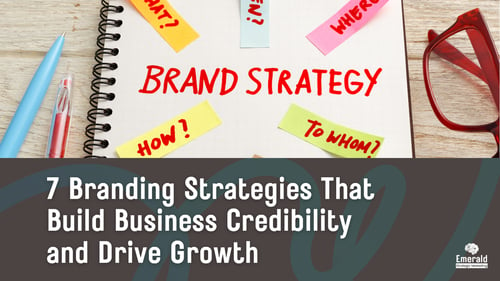
7 Branding Strategies That Build Business Credibility and Drive Growth
In a world where every brand is fighting for attention, trust has become the ultimate differentiator. Buyers are skeptical, markets are crowded, and traditional marketing alone can’t carry the weight of credibility anymore. That’s why thought leadership has emerged as one of the most powerful tools for building trust, accelerating sales, and elevating brand authority.
But before leaders can leverage it, they need to understand what thought leadership actually is, and what it isn’t.
What Is Thought Leadership?
Thought leadership is the practice of sharing original insights, informed perspectives, and experience‑driven guidance that helps your audience think differently or make better decisions. It’s not about being the loudest voice in the room; it’s about being the most valuable.
At its core, thought leadership is:
Expertise shared with intent
Leaders use their knowledge to educate, clarify, and elevate, not to self‑promote.
Forward‑looking perspective
True thought leaders don’t just comment on what’s happening; they articulate what’s coming next.
A trust‑building mechanism
When leaders consistently provide clarity, they become the go‑to source in their industry.
A long‑term strategy
Thought leadership marketing isn’t a one‑off post. It’s a sustained body of work that shapes perception over time.
When done well, thought leadership becomes a strategic asset that strengthens personal branding, elevates brand authority, and positions leaders as indispensable voices in their field.
What Thought Leadership Is Not
To build credibility, leaders must avoid the traps that dilute their message.
Thought leadership is not:
Self‑promotion disguised as insight
Talking about your awards, your product, or your company’s greatness is marketing—not thought leadership.
Trend‑chasing without perspective
Posting about every new buzzword or platform without adding depth weakens your authority.
Generic advice
“Work hard.”
“Put the customer first.”
“AI is changing everything.”
> These are statements, not insights.
Content for content’s sake
Thought leadership must be intentional, experience‑driven, and rooted in real expertise.
What CEOs and Businesses Should Be Posting
If leaders want to build trust and drive business, their content must go beyond surface‑level commentary. Here’s what high‑impact thought leadership marketing looks like.
1. Industry Insights and Interpretation
Your audience doesn’t need more news; they need meaning.
-
What’s changing in your industry
-
What’s misunderstood
-
What leaders should be preparing for
-
What the data actually means
Thought leadership example:
“Everyone is talking about automation, but the real shift CEOs should be preparing for is the rise of hybrid human‑AI workflows.”
2. Lessons From Real Experience
People trust leaders who share the why behind their decisions.
-
Mistakes you’ve made
-
Lessons you’ve learned
-
Frameworks you use to make decisions
-
Behind‑the‑scenes thinking
Thought leadership example:
“We almost invested in the wrong platform. Here’s the decision framework that saved us.”
3. Frameworks, Models, and Mental Maps
Leaders crave structure. Give them:
-
Step‑by‑step processes
-
Strategic models
-
Repeatable frameworks
-
Decision‑making tools
This is where your expertise becomes tangible.
4. Bold Predictions and Contrarian Takes
Thought leadership thrives on perspective—not shock value, but clarity.
-
What you believe others are getting wrong
-
What you see coming that others don’t
-
What you think the industry is overlooking
5. Values and Leadership Philosophy
People want to know how leaders think, not just what they sell.
-
What you stand for
-
How you lead
-
What you expect from your team
-
How you make tough decisions
6. Customer‑Centered Insights
Not testimonials - insights.
-
What customers are struggling with
-
What patterns you’re seeing
-
What problems will matter next year
This positions you as a leader who listens.
Why CEOs Must Be Visible, Not Just the Company
This is the part most leaders underestimate. Thought leadership is not just a marketing function; it’s a leadership responsibility.
People Trust People More Than Brands
A CEO’s voice carries authenticity that corporate messaging can’t replicate.
When leaders speak, trust accelerates.
Visibility Builds Brand Authority
A visible CEO elevates the entire organization.
A silent CEO leaves a vacuum that competitors will gladly fill.
It Attracts Top Talent
High‑performing candidates want to work for leaders with vision, not faceless companies.
It Shortens the Sales Cycle
When prospects already trust the leader, they trust the company faster.
It Humanizes the Brand
Personal branding isn’t vanity, it’s strategy.
A CEO’s personality, values, and worldview create emotional connection.
It Future‑Proofs the Business
In a world of AI‑generated content, human perspective becomes a competitive advantage.
Visible CEOs experience 80% higher average annual share price growth compared to their peers? Source: Golin
How CEOs Can Start Building Thought Leadership Today
Here’s a simple, actionable roadmap.
1. Choose 3–5 Core Themes
These should align with:
-
Your expertise
-
Your company’s mission
-
Your leadership philosophy
2. Commit to Consistency
Weekly posts, monthly articles, quarterly deep dives.
Consistency builds credibility.
3. Share the “Why” Behind Decisions
This is where trust is built, and authority is earned.
4. Partner With Your Marketing Team
You provide the raw insight.
They shape it into powerful thought leadership marketing.
5. Embrace Imperfection
Authenticity beats polish every time.
Thought Leadership Is a Growth Engine
Thought leadership builds trust. Trust drives business.
And in today’s market, the leaders who show up - consistently, authentically, and insightfully - are the ones who win.
CEOs who invest in thought leadership don’t just elevate their personal brand; they elevate their entire organization. They build brand authority, attract better opportunities, and shape the conversations that define their industry.
The future belongs to the leaders who speak up.